
The Five Gardens
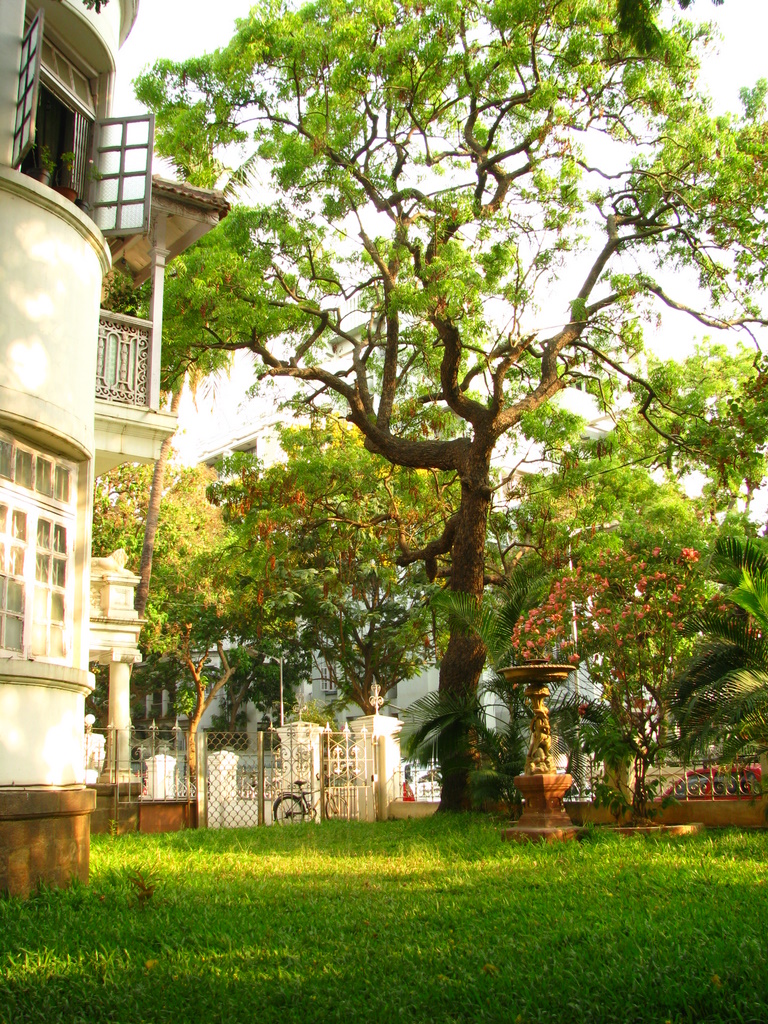
One round garden held by four others, about seven acres of green at the heart of the colony. Walkers are out by 4:30 every morning.
Photo: Shyambhagat, public domain
Planned in the 1920s after the Bombay plague, one tree at a time. Still home to the largest Zoroastrian community on earth.
In 1896 bubonic plague tore through Bombay's crowded old town. The city answered with its first planned suburb, laid out on marshland at Dadar, with wide roads, gardens and a three-storey height limit.
A Parsi civil engineer, Mancherji Edulji Joshi, persuaded the authorities to set aside plots for his community. He drew up the plan himself, down to which tree would line which street, and planted them before the houses went up.
He never had the money for a wall, so Dadar became the only Parsi colony in Mumbai that is open to the city around it. A century on, it is still shaded, low-rise and quiet, and it still carries his name.

About sixty kinds of trees, five great gardens, a fire temple from 1928 and family homes with their names over the door. Swipe through.
One round garden held by four others, about seven acres of green at the heart of the colony. Walkers are out by 4:30 every morning.
Photo: Shyambhagat, public domain

Designed by architects, not contractors. Low, airy, with iron-grilled balconies, and named for the families who built them.
Photo: Kaushal Karkhanis, CC BY-NC-SA 2.0

The Rustom Faramna Agiary has kept its fire burning since 1928. It was paid for by a cook to the Maharaja of Jaipur who had no heirs.
A Parsi fire temple. Photo: Atmalinga, CC BY-SA 4.0

Fanlights, sunburst grilles and the winged Faravahar. Filmmakers keep coming back for them: Rustom, Raees and Special 26 were all shot here.
Photo: Kaushal Karkhanis, CC BY-NC-SA 2.0

Old cafés like Koolar & Co. at King's Circle, and the youth assembly's mutton cutlets, which are a colony legend.
Photo: Kaushal Karkhanis, CC BY-NC-SA 2.0
From a marsh outside the city to the largest Zoroastrian neighbourhood in the world.
The Improvement Trust plans Bombay's first suburb at Dadar, Matunga, Wadala and Sion.
Joshi secures 103 plots on a 999-year lease. Families move out of the plague-hit old town.
The Rustom Faramna Agiary is consecrated. It wins a heritage award in 2003.
After a six-year fight in court, residents keep the colony's covenanted homes for the community.
Ten to fifteen thousand Parsis call it home. Cutting down a tree here is still not done.
Residents of Dadar Parsi Colony, celebrating their wedding.


May your home be as green and as open as the lanes you live in, and full of good thoughts, good words and good deeds. Humata, Hukhta, Hvarshta.